Tellers-Kent Organ Co.
Opus 572, 1933
St. Andrew's Catholic Church / Pentecostal Miracle Deliverance Center Church
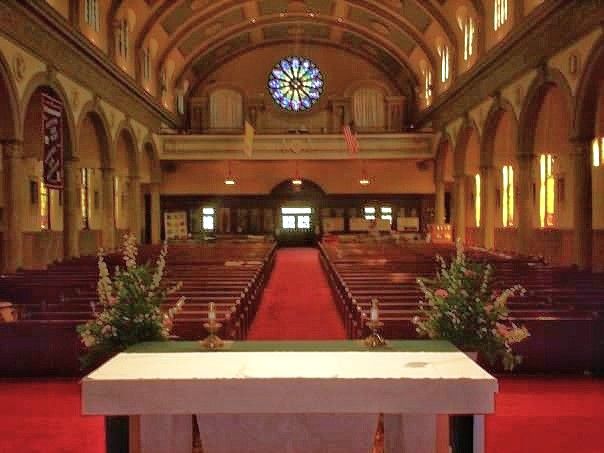
Sanctuary; rear gallery
923 Portland Avenue
Rochester, NY, US
Instrument ID: 63876 ● Builder ID: 6186 ● Location ID: 55468
⬆️ These are database IDs that may change. Don't use as academic reference.EXPLORE IMAGESSomething not quite correct?Suggest an Edit
Plenum Organ Company
🤝 Instrument entries in New York sponsored by:
We are grateful for the generous support of our sponsors, who make it possible for us to continue our mission of preserving and promoting the rich history of pipe organs across the globe.

IMAGES
Something missing or not quite correct?Add ImageorSuggest an Edit
STOPLISTS
No stoplist details are available. If you have stoplists, please consider sharing them with us.
Something missing?Add StoplistorSuggest an Edit
CONSOLES
Builder: Unknown
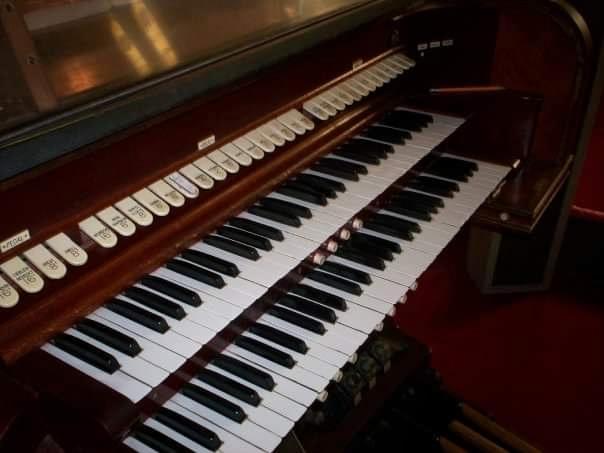
Position: Console in Fixed Position, Center
Design: Traditional Without Cover
Pedalboard Type: Concave Radiating (Meeting AGO Standards)
Features:
2 Manuals 34 StopsElectrical Stop Action✓ Crescendo✓ Combination Thumb Piston(s)✓ Combination Toe Piston(s)✓ Sforzando Thumb Piston(s)✓ Sforzando Toe Piston(s)✓ Hitchdown Coupler(s)Stop Layout: Tilting/Rocking Tablets Above Top Manual
Expression Type: Balanced Expression Shoes/Pedals (Meeting AGO Standards)
Combination Action: Adjustable Combination Pistons
Control System: Unknown or N/A
Something missing or not quite correct?Add ConsoleorSuggest an Edit
DETAILS
This instrument is: Extant and Playable in this location
Updated by Ian Scheil, who has heard or played the organ. All pipes are hidden behind a facade. There are two free-standing pipe chambers that are built about four feet off ground level. Underneath the chambers are the tremulant chests. There are a few ranks of exposed pipes outside of the chambers such as an Open Diapason 8' rank as well as open bass pedal ranks. The highest pipe ranks are 16' pipes, many wooden exposed pipes. For clarification when stating \"exposed\" in this it is referencing their position outside of the chamber, however all pipes are hidden behind a white wooden facade that displays no pipes. The console contains a broken wooden panel on one side and has a unique curvature. It is not enough to classify as a typical horseshoe pattern, and is more or less traditional style with the exception of these curved side panels. All stops are located above the swell manual. Organ contains a Swell and Great manual. I will be gathering more information shortly for the database on this instrument.
Database Manager on May 1st, 2019:
This entry describes an original installation of a new pipe organ. Identified by Ian Scheil, who has heard or played the organ. The Tellers-Kent organ at St. Andrew's Church was installed around 1933 in a new church building (cornerstone of church is 1928, but construction was not yet complete then). The organ has remained in use since then at weekly services, however was not maintained as well as it could have been. I personally played this instrument every single day as my mother worked at the church. I'd take the bus to the church after school each day and play for a few hours. I ended up being one of the only people to maintain the instrument at the time, having had the opportunity to explore and learn the pipe chambers and mechanisms first hand. The instrument has a very unique sound unlike any other I have ever heard. There is a recording in which the organ can be heard during a concert at St. Andrew's with the Eastman Chamber Orchestra where the lack of upkeep can be heard, but so can the actual power and unique quality of this instrument. The tremulants were very similar in sound to a theatre organ. I have much more information to add and a photograph of the console following the addition of this entry.
Something missing or not quite correct?Add NoteorAdd WebpageorAdd Cross ReferenceorSuggest an Edit