Hilbus & Howison
1812
Originally (1812ca.)
Smithsonian Institution
National Museum of American History
Constitution Avenue Northwest
Washington, DC, US
8 Ranks
EXPLORE IMAGESVIEW STOPLISTSomething not quite correct?Suggest an Edit
IMAGES
Something missing or not quite correct?Add ImageorSuggest an Edit
STOPLISTS
Something missing or not quite correct?Add Stoplist
CONSOLES
Builder: Unknown
Position: Unknown
Design: Unknown
Pedalboard Type: Unknown
Features:
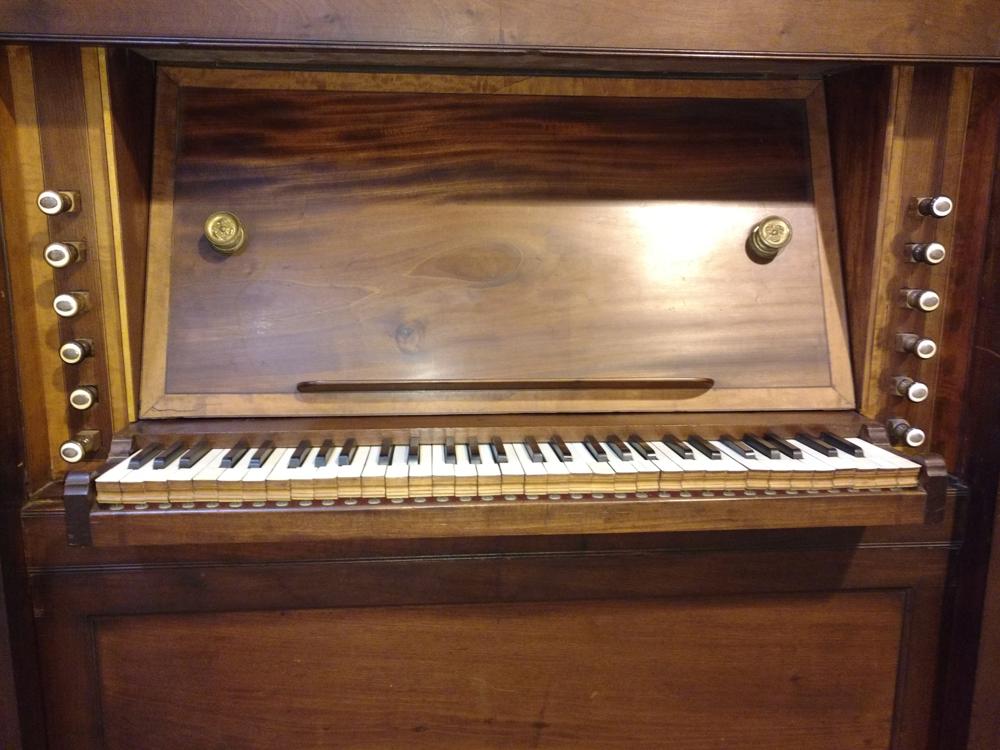
1 Manuals Mechanical (Unknown) Key ActionMechanical Stop ActionStop Layout: Unknown
Expression Type: Unknown
Combination Action: Unknown
Control System: Unknown or N/A
Something missing or not quite correct?Add ConsoleorSuggest an Edit
DETAILS
This instrument is: Not Extant and Not Playable in this location
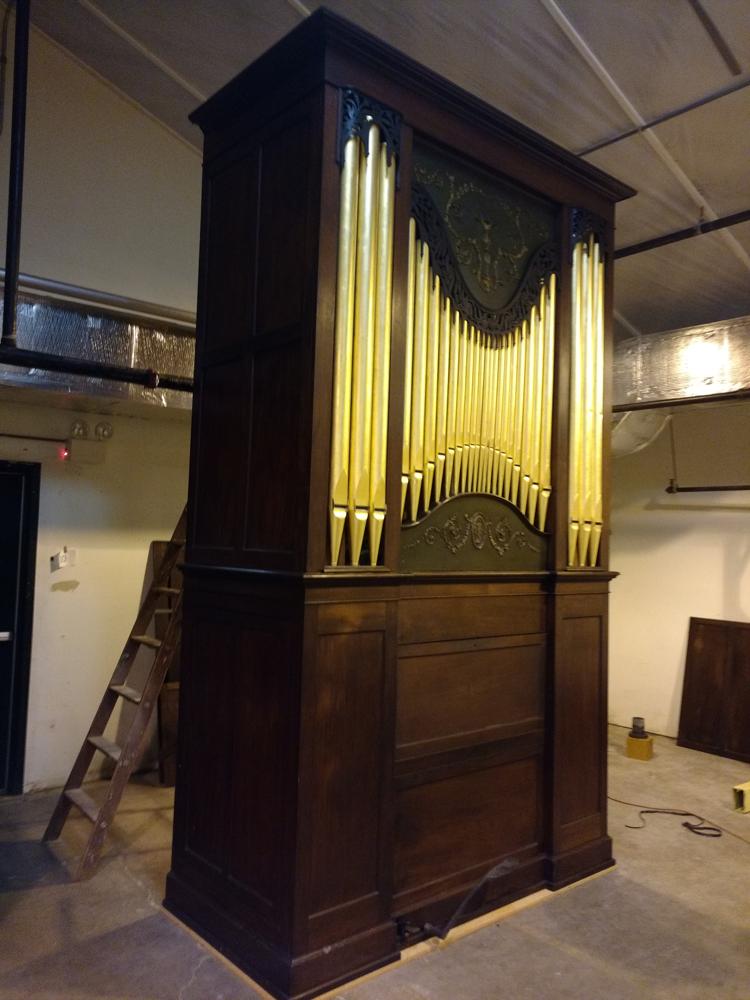
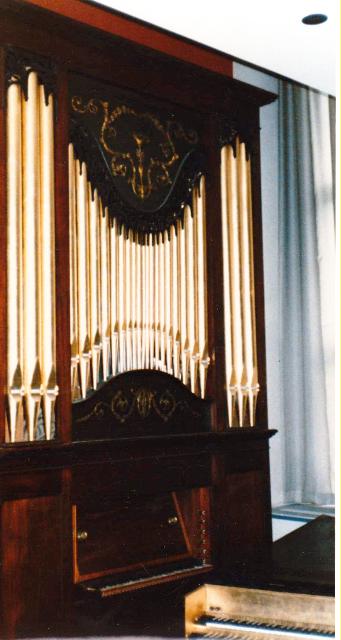
When the O.H.S. visited the Smithsonian as part of the 1964 convention, the organ was unrestored and in exceptionally poor condition, and the musical instrument collection was in the History & Technology wing of the museum. There is no mention of the instrument in the Handbook, and it may therefore not have been on display. Following the organ's restoration by C.B. Fisk in 1967, it was relocated to a stand-alone position at the entrance off the main corridor to the Division of Culture and Arts where the musical instrument collection was on display. I believe it was moved again to the chamber music hall, but this needs to be checked.
Scot Huntington on October 30th, 2020:
At some point in the early 2000s, the musical instrument collection, including the Hilbus and Snetzler organs, were moved into storage while the History and Technology wing of the museum was completely overhauled and rebuilt (without exhibit space for the collection). The collection was moved into a government-owned off-site warehouse. At some point between then and James Weaver's retirement as instrument curator and his becoming Executive Director of the OHS in 2011, asbestos was discovered in the warehouse and it has been declared a hazardous waste site with any entry into the building for any purpose extremely forbidden. The Smithsonian currently has no plans to reassemble the Musical Instrument collection for public viewing for the foreseeable future, if ever.
Database Manager on October 30th, 2004:
The original builder was Jacob Hilbus (c. 1812).
Database Manager on October 30th, 2004:
Status Note: There 1993
Database Manager on October 30th, 2004:
From St. Thomas Epis., Hancock, MD c. 1912.
Webpage Links: Hilbus Pipe Organ
Related Instrument Entries: Unknown Builder (ca. 1840) , Jacob Hilbus (1812ca.) , Unknown Builder (1851ca.)
Something missing or not quite correct?Add NoteorAdd WebpageorAdd Cross ReferenceorSuggest an Edit